


 admin
admin A Comprehensive Guide to Filing for Divorce When Married
Deciding to end a marriage is one of the most significant life decisions an individual can make. The subsequent legal process, filing for divorce, requires careful planning and adherence to specific jurisdictional rules. Understanding the initial steps is crucial for a smoother transition into the next phase of life.
Understanding the Grounds for Divorce
Before initiating the paperwork, you must establish the legal grounds for divorce in your jurisdiction. While some states still recognize fault-based grounds, most modern legal systems operate under no-fault divorce statutes. No-fault grounds typically cite irreconcilable differences or the irretrievable breakdown of the marriage, meaning neither party needs to prove wrongdoing.
Fault-based grounds, where applicable, might include adultery, cruelty, abandonment, or imprisonment. Filing under fault grounds often requires substantial evidence and can sometimes influence alimony or property division decisions, though this varies significantly by state.
Establishing Residency and Jurisdiction
The very first procedural hurdle is satisfying the residency requirements of the court where you plan to file. Every state mandates that at least one spouse must have lived in the state for a specific period (e.g., six months or a year) before filing. This requirement ensures the court has the proper jurisdiction over the marriage.
Jurisdiction refers to the court’s legal authority to make decisions regarding your case, including property division and child custody. Confirming residency requirements prevents the dismissal of your petition due to improper venue.
Step 1: Gathering Essential Documentation
Preparation is key. Before setting foot in the courthouse, assemble all relevant financial and personal documents. This early organization will streamline the entire process, especially when dealing with asset division and support calculations.
- Identification and Marriage Records: Original marriage certificate and identification documents for both parties.
- Financial Statements: Tax returns (last three to five years), bank statements, investment account details, and retirement fund statements.
- Property Deeds and Titles: Documents related to real estate, vehicles, and major assets.
- Debt Information: Statements for mortgages, credit cards, loans, and other liabilities.
Step 2: Completing the Initial Petition or Complaint
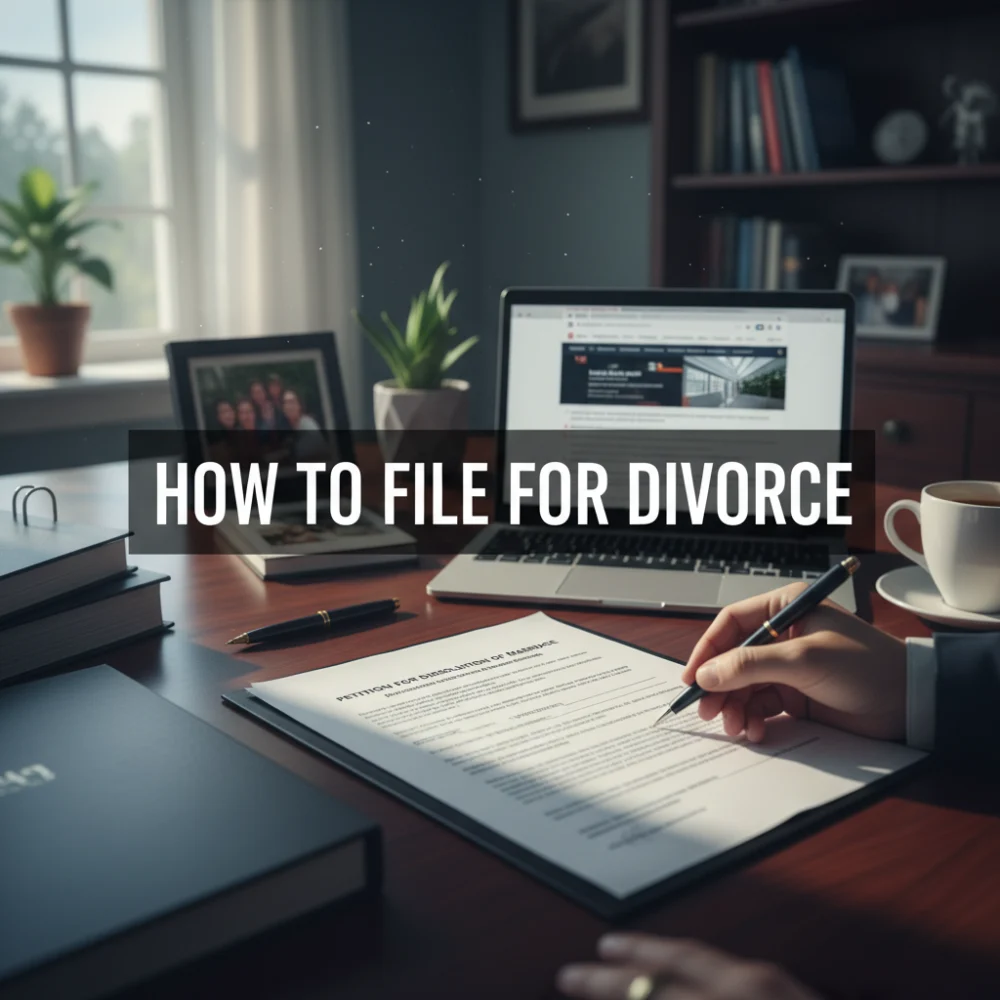
The formal process begins by completing and filing the initial legal document, usually called the Petition for Dissolution of Marriage or Complaint for Divorce. This document officially notifies the court and your spouse that you are seeking a divorce.
This petition typically requires basic information such as names, dates of marriage and separation, information about minor children, and the grounds for divorce. It also outlines what relief you are seeking (e.g., custody, property division).
Step 3: Filing with the Court Clerk
Once completed, the petition must be filed with the appropriate county court clerk’s office. You will need to pay a filing fee at this stage. If you cannot afford the fee, most jurisdictions allow you to file a Motion to Proceed In Forma Pauperis to request a waiver.
Step 4: Serving Your Spouse
Legally, your spouse must be formally notified of the divorce action. This process is called service of process. It generally involves having a neutral third party (a process server or sheriff) hand-deliver a copy of the filed petition and a summons to your spouse.
Proper service is essential for due process. If you know your spouse’s location and they are cooperative, some states permit service by certified mail, but professional service is often recommended to ensure compliance with court rules.
Step 5: The Spouse’s Response Period
After being served, your spouse has a legally mandated time frame (often 20 to 30 days, depending on the jurisdiction) to file a formal Answer or Response with the court. If they fail to respond within this period, you may be eligible to seek a default judgment.
Navigating Temporary Orders
During the time between filing and the final decree, temporary orders may be necessary. These orders address immediate, pressing issues such as temporary child custody schedules, temporary spousal support (alimony pendente lite), and who maintains possession of the marital home.
The Discovery Phase
If the divorce is contested, the discovery phase begins. This is the formal exchange of evidence and information between both parties. Tools used in discovery include:
- Interrogatories (written questions requiring written answers).
- Requests for Production of Documents (demanding financial records).
- Depositions (out-of-court sworn testimony).
Reaching Settlement or Proceeding to Trial
The vast majority of divorce cases settle out of court through negotiation, mediation, or collaborative law processes. Settlement avoids the high cost, stress, and unpredictability of a trial. A Marital Settlement Agreement (MSA) outlines all agreed-upon terms.
If an agreement cannot be reached on key issues—such as asset division, custody, or support—the case proceeds to trial where a judge will make the final binding decisions for the parties.
Finalizing the Divorce Decree
Once all issues are resolved, either through settlement or judicial ruling, the court issues a Final Decree of Dissolution of Marriage. This document legally terminates the marriage and incorporates all finalized terms regarding property, support, and children. This is the official conclusion of the filing process.
It is strongly advisable to consult with a qualified family law attorney in your state. Divorce laws are complex and highly specific to geography, and professional guidance ensures all legal rights and obligations are properly addressed throughout this challenging journey.





0 Comment